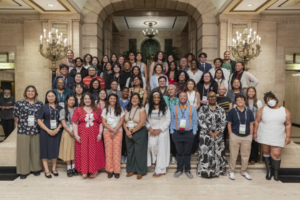
Hi Sarah, thanks for taking the time to talk about your experience at IAML for our members. You attended the International IAML (International Association of Music Libraries, Archives) Congress, 2025 in Salzburg, Austria! How did you find the experience?
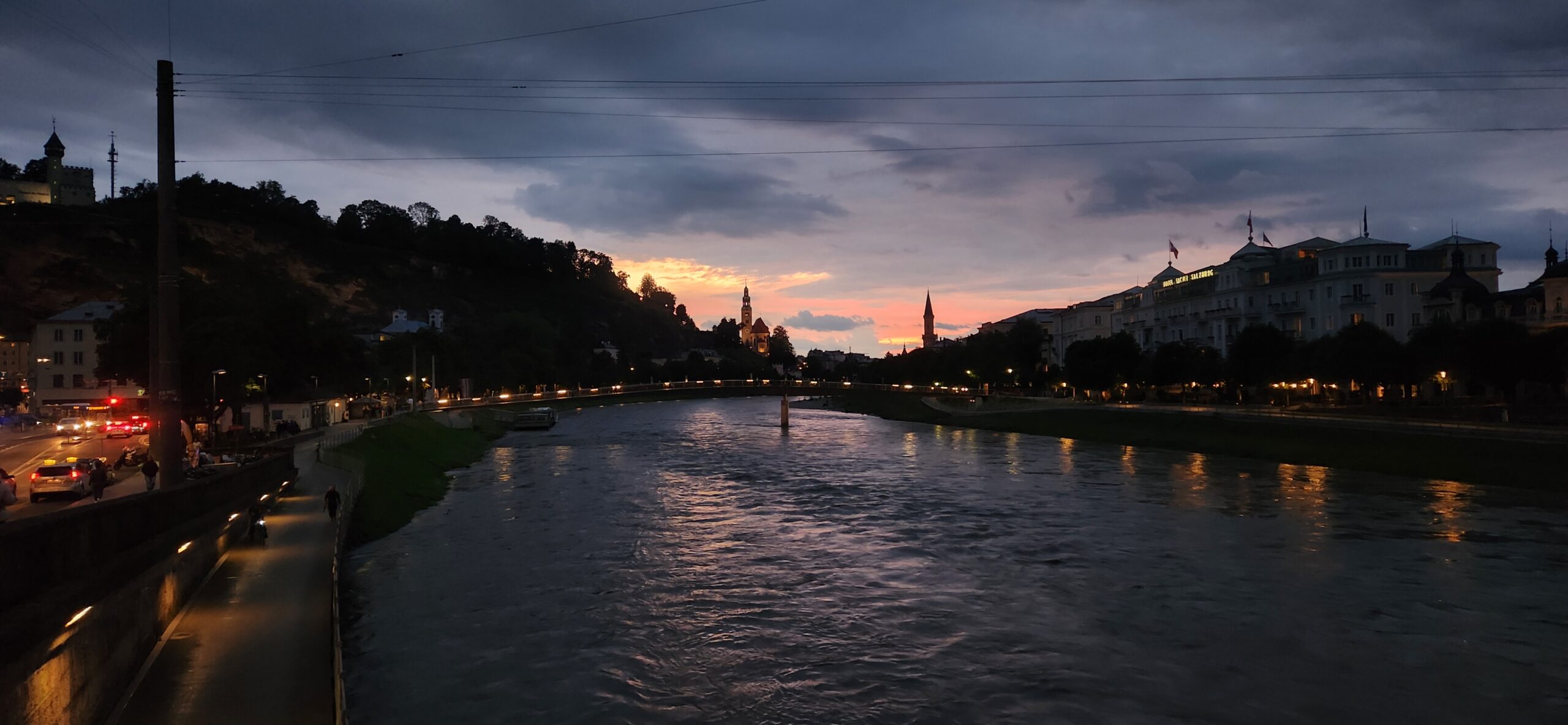
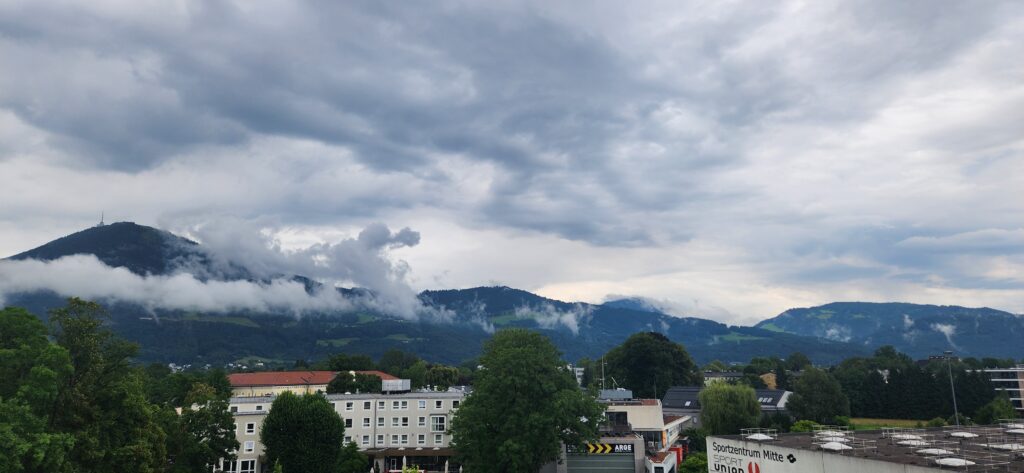
I had an amazing time at the IAML Congress in Salzburg! Despite the region-typical rainy weather throughout the week, Salzburg was stunning, and the congress was both exciting and insightful!
Was this your first time attending IAML, or your first time in Austria?
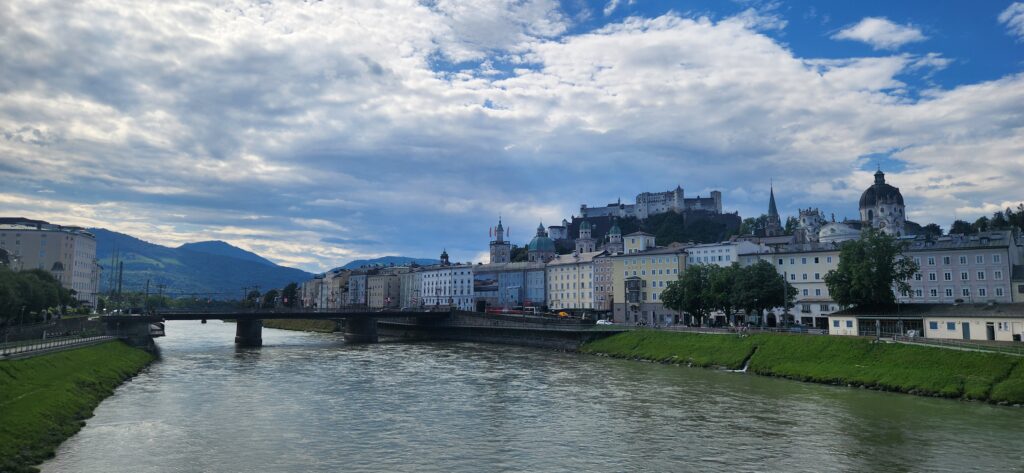
This was my first IAML Congress and my first time visiting Salzburg, but not my first time in Austria! As an undergraduate, I had the opportunity to study abroad in Vienna for two months in the summer of 2022. I absolutely fell in love with Austria that summer, and was so excited to have the opportunity to return for IAML!
Did you have a chance to explore Salzburg or Austria at large?
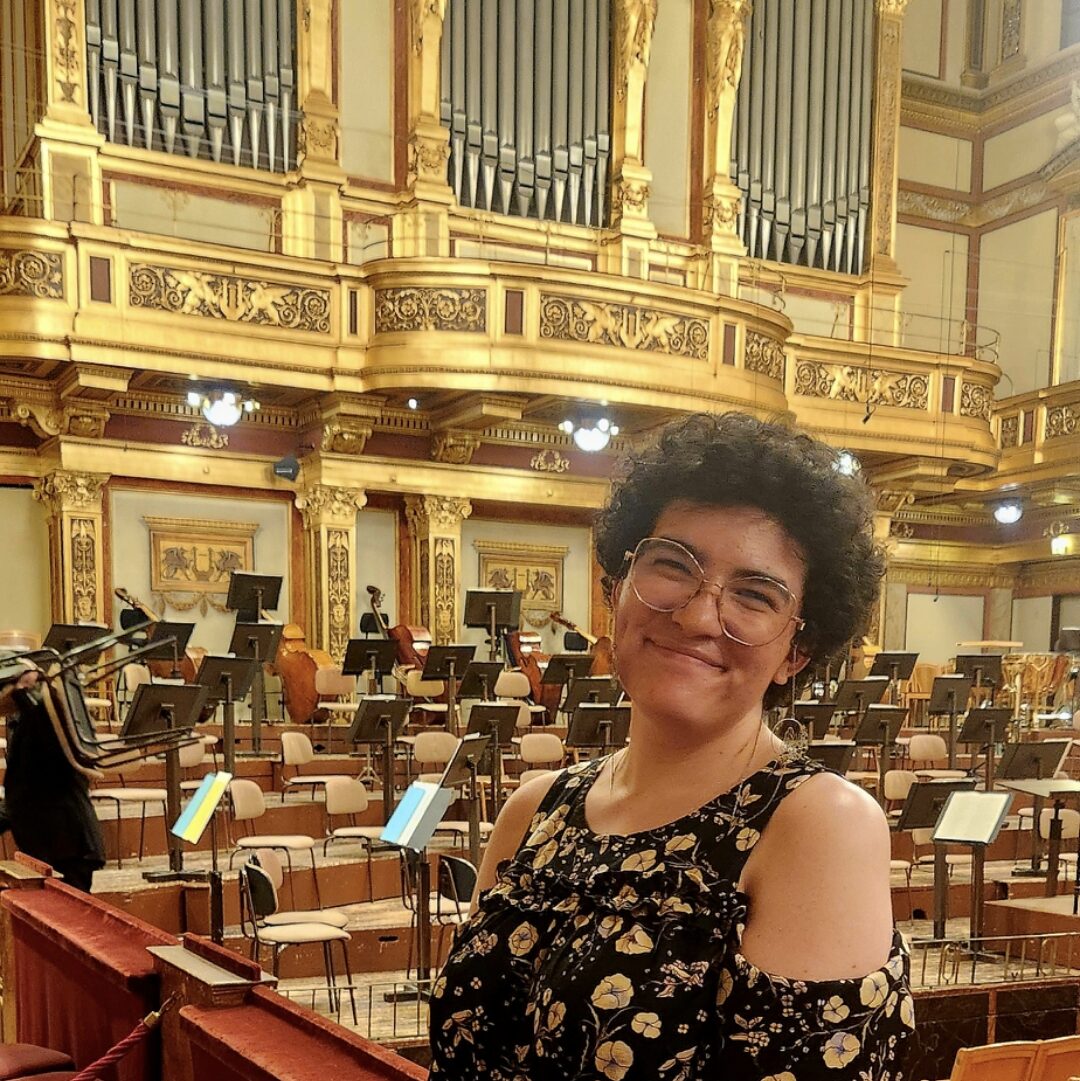
Yes to both! In terms of exploring Austria as a whole, I spent the week prior to the congress visiting Vienna, and while I did come down with a cold partway through that week, it was wonderful to return to the city and connect with some old friends from when I had previously studied there! One of the highlights of that visit to Vienna was seeing the Staatskapelle Berlin play Bruckner’s 6th Symphony at the Musikverein!
As for Salzburg, I did have the opportunity to do some exploring during the congress, as there were numerous tours that attendees could go on. I immensely enjoyed my group tour of the archives and performance venues of the Salzburger Festspiele, a city-wide annual summer festival that Richard Strauss helped found in 1920! A highlight of that tour was seeing the Felsenreitschule, an amazing performance venue that was first adapted from a rock quarry in the late 17th century for the use of the summer horse riding school. The result is a striking stage carved directly into the Mönchsberg mountain!
The majority of my exploring, however, took place after the congress had concluded. I stayed in Salzburg for four days after the congress, and spent the time exploring the historical and cultural sights of the city. My favorites were the DomQuartier, the Mozart Geburtshaus (the house Mozart was born in), and the Mozart-Wohnhaus (the house where the Mozart family lived from 1773-1787)!
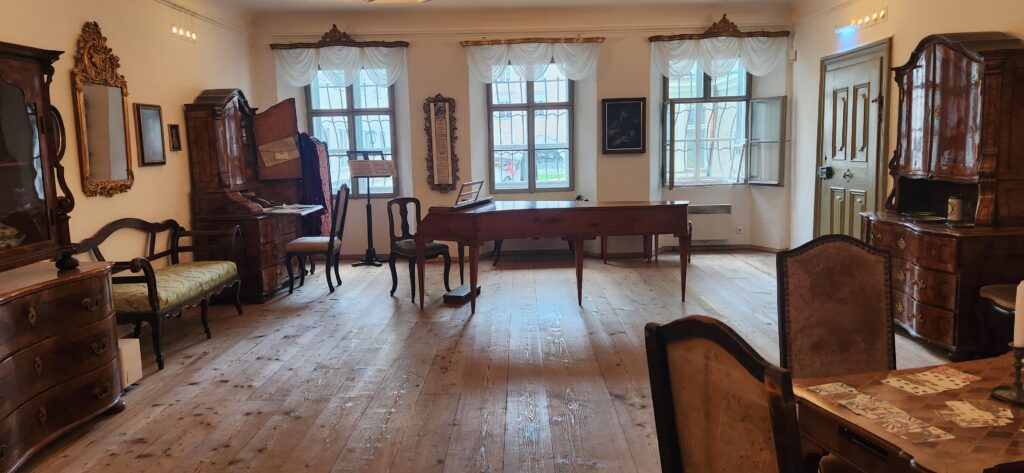
A photograph from my visit to the Mozart Geburtshaus!
IAML brings in librarians, archivists, and researchers from all over the world, were there any talks or sessions that broadened your view of music librarianship?
Oh, absolutely! Honestly, I think I would have been hard-pressed to not have my view of the profession broadened throughout the week! As a student focused on music archives, I was particularly excited by the number of fascinating archives-specific sessions that were available. One of my favorites was Setting & Teaching of Music Archival Collections, which included three amazing talks, each of which broadened my views in different ways.
The first talk, “Scattered Archives and Digital Solutions” by Richard Sutcliffe of the Brussels Music Instrument Museum (MIM), included some fascinating insights into how the museum manages their archival collections and makes them available, including how they are using ArchivesSpace to crosslink musical instruments with pieces of correspondence or other items that make reference to those instruments. This idea of crosslinking archival objects is a concept I am excited to try and implement into my own work with ArchivesSpace, which is also used at my institution!
The second talk, “The Art of Making Art” by Arianna Johnson Quinn of Florida State University, covered the establishment of the University’s College of Music Archives in 2023. I found Quinn’s candid discussion surrounding the trials and triumphs of creating a new repository in the modern day very insightful. I particularly appreciated the three guiding principles she outlined that guided her process: 1) archives are living spaces, 2) archives are spaces of advocacy, and 3) archives are centers of outreach.
The third talk in the session, “Preserving the Transient: Archiving Performance Ephemera in a Digital Age” given by Benjamin Amakye-Boateng of the University of Ghana touched on how cultural emphasis on ritual, re-performance, and embodied memory over physical documentation has resulted in performance ephemera such as programs, flyers, rehearsal notes, ticket stubs, and photographs being long overlooked as a way to preserve information on musical performances. This, combined with the fact that orally-based traditional African archival practices have been placed at risk by aging elders and migration, has informed the University’s efforts to collect, preserve, and digitize performance ephemera. This session detailed those preservation efforts and also touched on the importance of fostering a shared sense of community with the students, alumni, performers, and audience members from whom that ephemera often came. This session provided me not only with insight into African archival practice and the work of modern institutions on the continent, but it also challenged me to think more about how my own culture’s emphases could potentially be causing certain materials with research value to be overlooked.
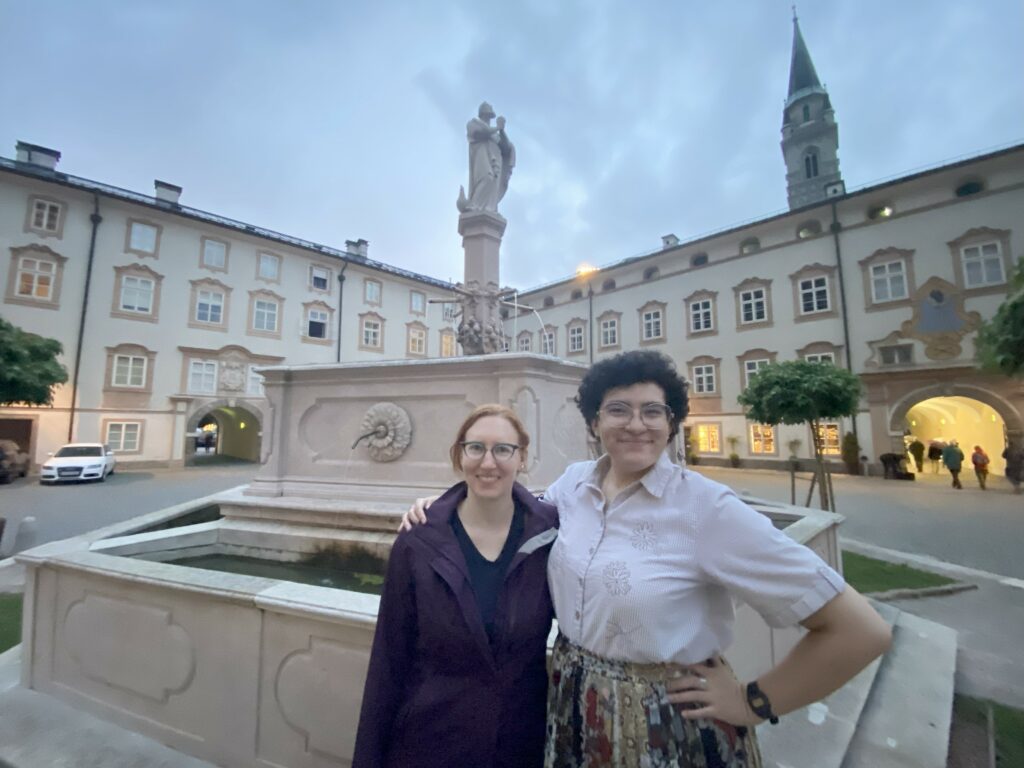 MLStEP’s advisor Liz Berndt and me at IAML!
How did you approach this conference, did you plan your schedule ahead of time?
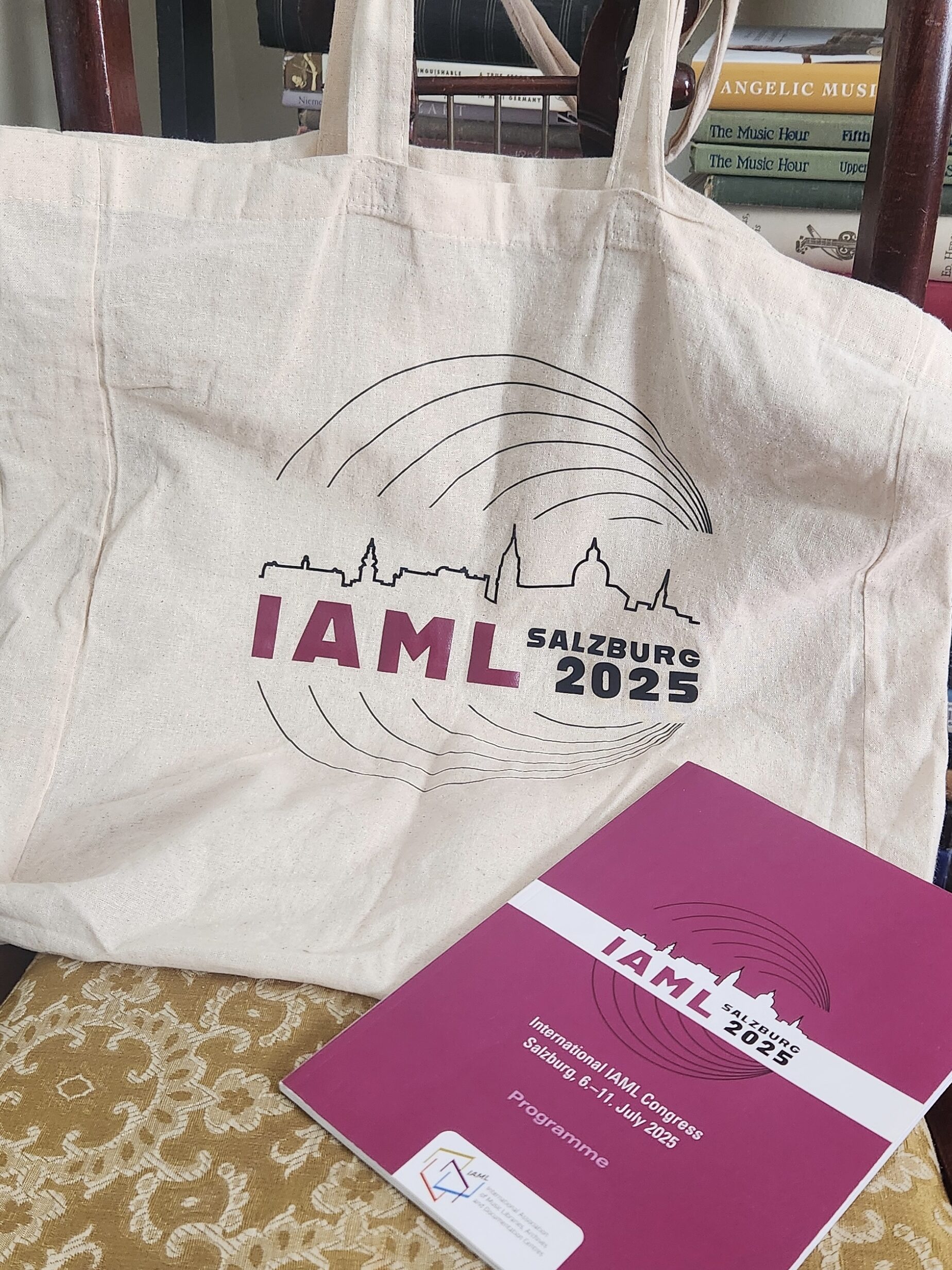
IAML published the preliminary program online well in advance of the Congress, which I looked through about a month prior. I added the sessions that I anticipated wanting to attend into my phone’s calendar, which is where I typically manage my schedule. There was also a lovely print program provided to all attendees at the congress, and a virtual program was available through Sched. IAML organized the presentations into three-talk session blocks, with all three talks in the session being based around a common theme, which I found very helpful! Over the course of the week, I met several students and early professionals who were presenting, and I did wind up altering my originally planned schedule to catch a few of their sessions. So, there was a combination of pre-planned structure and spontaneity involved!
Did you receive funding support to attend, and do you have any suggestions for folks interested in applying?
I received financial support to attend IAML through an internal Indiana University library student worker professional development fund, where I am currently working on my MLS and MIS degrees. While that fund is limited only to students at Indiana University, IAML does have funding available for individuals hoping to attend a congress, which I would highly recommend checking out. The Music Library Association also offers the Lenore F. Coral IAML Travel Grant for MLA members who wish to attend a IAML Congress.
In retrospect, did you find IAML approachable for students and emerging professionals?
I’d always been a bit intimidated by IAML, but once I was actually there, I found that everyone was extremely kind and approachable! They had a first-time attendees’ information session and mixer at the start of the congress, which was such a wonderful opportunity to get acquainted with other newcomers as well as IAML’s organizational structure. I met a lot of students and emerging professionals both at the first-time attendees’ session and throughout the week!
I saw firsthand how IAML is working to be even more open to students at the business meeting toward the end of the week as well. One of the items on the agenda was a reduced membership fee for students, which passed overwhelmingly!
Do you think you will try to attend the future conferences in Greece or Toronto?
Absolutely! I had such a wonderful time, and I’m hoping to put together a presentation for one of the upcoming IAML Congresses as well!
If you would like to share a professional experience with the MLStEP community, please fill out the form on our blog page.